SEEDLAND®   
"Growing a Beautiful tomorrow!
®"
Search our store for products:
  Ryegrasses.com - Quality Ryegrass Seed from Seedland.com!
 

Manhattan IV Perennial Ryegrass
Seedland.com - The lawn & garden specialists!

GardenPatio.com
Seedland.com

NOTE: You have reached an information page. 
 To view product prices visit our store at Seedland.com

Hello nature lover.....!
ORDER
ONLINE  |  PHONE ORDERS: PHONE

Phone Business hours - Mon-Fri. 9-5 EST ONLY - Contact via Email
Hello nature lover.....!

Varieties | Adaptation | Usage | Preparation | Seeding | Maintenance
Diseases | Fertilizers | Mowing | Pasture | Pests | Weeds | Water | Home

Manhattan 4 Perennial Ryegrass Features:

AVAILABLE NOW !

  • Endophyte for natural insect resistance
  • Greater tiller density for wear tolerance
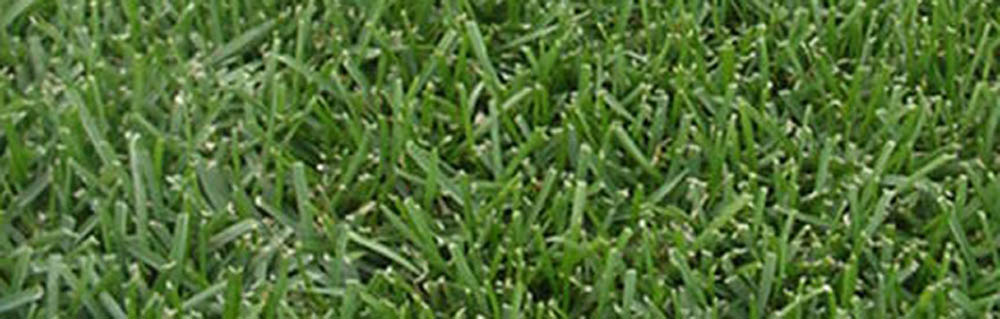
  • Dark green foliage
  • Fine leaf texture with a more dwarf growth pattern
  • Good heat and drought tolerance
  • Good shade adaptation
  • Excellent spring green-up
  • Good resistance to Rhizoctonia brown patch and Crown Rust
  • Very good resistance to stem rust
  • Better mowing
Ryegrasses.com
Technical Information:

Many years ago Manhattan Ryegrass broke new ground in turfgrass breeding. Noted for its wear and cold tolerance, Manhattan turf-type perennial ryegrass quickly became the worldwide standard for quality homelawn, golf course and athletic field turf. Manhattan 3 was released after 10 years of cooperative efforts by Dr. C. Reed Funk at Rutgers University and William A. Meyer At Pure Seed Testing, Inc. -- Now the next generation in Manhattan 4 is available.


BUY MANHATTAN IV
FROM SEEDLAND
(Ships Direct from Oregon)

Manhattan 3

Through an extensive hybridization and selection program, thousands of plants were evaluated in nurseries. The best of these were chosen for improved heat and drought tolerance, disease resistance and better mowing qualities. The ultimate selections became Manhattan 3. The Manhattan 4 was developed from the 3 variety and is endophyte enhanced. Endophyte provides natural resistance to all above-ground feeding insects.


Coming Soon - MORE INFORMATION ON MANHATTAN IV


BELOW IS DATA ON Manhattan 3.

Geographical Area of Adaptation:

MANHATTAN 3

Manhattan 3 thrives in cool, moist areas from the coastal regions of Virginia northward into Canada. In the Midwest, Manhattan 3 is well adapted from the Mason-Dixon line to southern Canada, and in the west from southern California into British Columbia. In the South, Manhattan 3 is an excellent winter overseeding grass for dormant bermudagrass turf, and transitions nicely.


Soil, Climate and Fertility Requirements:

Manhattan 3 performs very well in sandy to heavy clay soils, but will not hold its tight density in extremely wet soils or under heavy shade. It will persist in compacted soil, but requires adequate drainage where water penetration is a problem. Maximum density is achieved under full sun. It is adapted to pH levels from 5.5 to 8.5 with good response achieved from an adequate lime application, at a pH lower than 5.5. Manhattan 3 requires moderate nitrogen fertilization (2 to 4 lbs. actual N (Nitrogen) per 1000 sq. ft. per year). It performs well using a balanced fertilizer with a 3:1:2 ratio of NPK (Nitrogen, Phosphorus, Potassium) and sulfur. Manhattan 3 has also shown excellent density and stress tolerance when compared with other perennial ryegrasses.

Disease Resistance and Susceptibility:

Manhattan 3 has demonstrated very good resistance to stem rust and leaf spot, and good resistance to Rhizoctonia, brown patch and crown rust. It has improved resistance to red thread when compared with Manhattan. Rust and red thread infection can be reduced by timely applications of nitrogen fertilizer. Approximately 1 lb. per 1000 sq. ft. will reduce the incidence of these two diseases. Recovery from disease injury is very good with Manhattan 3.

Ryegrasses.com

Uses for Manhattan 3:

Home Lawns: Use in a mixture with improved fine fescue and Kentucky bluegrass varieties. A Nitrogen, Phosphorus, Potassium ratio of 1:1:1 does well for most areas including shaded turf. Straight Manhattan 3 can be used in high activity areas. When seeded alone, a rate of 10 lbs. per 1000 sq. ft. is recommended for Manhattan 3, while 5 lbs. per 1000 sq. ft. is adequate for the mixture. Athletic Fields (football, baseball, track, volleyball, school playgrounds): Plant Manhattan 3 alone At 10 lbs. per 1000 sq. ft. , or in a mixture with fine fescue and bluegrass at 5 lbs. per 1000 sq. ft. Maintain a cutting height of 1 to 2". The greater density of Manhattan 3 provides a natural pad for protection from falls.

Golf Courses:

Manhattan 3 can be used on tees, fairways, driving ranges and hard use areas such as cart paths and foot bridge approaches. Plant alone or in a mixture with fine fescue and Kentucky bluegrass, using the same seeding rate as above.

Winter Overseeding:

Fairways and roughs, seed at 400-600 lbs. per acre. Putting greens, 40 lbs. per 1000 sq. ft. Overseeding Devastated Home Lawns and Other Turf Areas: Plant a mixture of Manhattan 3, fine fescue, and Kentucky bluegrass after verticutting or de-thatching the worn out turf area. A seeding rate of 5 lbs. per 1000 sq. ft. is recommended.

Municipal Parks, Trailer Courts and Camp Areas:

Due to its deep root system, Manhattan 3 will withstand heavy foot traffic and requires less water in summer, thus making it desirable in these areas. Seeding rate same as above.

Low Maintenance Areas:

Manhattan 3 stays green later into the summer season due to its deep root system. The slower rate of vertical growth and shorter plant height requires less frequent mowing in these locations. Plant a mixture of Manhattan 3, Kentucky bluegrass, and fine fescue at a seeding rate of 3 lbs. per 1000 sq. ft.

Stand Establishment:

With Manhattan 3, homeowners can establish a quality turf with little risk of failure. Germination takes place within six days under normal seed bed and germination conditions. First color will show in seven days, a flush of dark green will be evident in 14 days. Mowing may be required in 21 days and use of the turf area can take place after five weeks.

Maintenance:

Manhattan 3 requires only moderate nitrogen fertilization (2 to 4 lbs. actual N (Nitrogen) per 1000 sq. ft. per year). Because of its increased heat and drought tolerance, less watering is required; however, irrigation during droughty periods is suggested. The recommended cutting height for lawns is 1 to 2". On overseeded dormant Bermudagrass golf course greens, Manhattan 3 looks terrific at a 1/4" cut.

Lawns: Choices | States | Diseases | Fertilizers | Irrigation | Mowing | Pests | Weeds

 Ryegrasses.com    Growing a beautiful tomorrow!®
Search our store for products:

Google
 

Seedland seeds --- Growing a beautiful tomorrow!

© 1999 Seedland®, Inc. - All rights reserved.

Visa MasterCard: The Future of Money (TM)  AMEX

USA Sales | Worldwide Sales | About us | Contact Seedland | Questions?
Guarantees | Seed tests | Quality Issues | Advertising | Exports | Commercial
Wholesale | Payment FAQ's | Privacy & Security | Accounting Questions

Lawns: Choices | States | Diseases | Fertilizers | Irrigation | Mowing | Pests | Weeds
HAVE LAWN QUESTIONS YOU NEED ANSWERED?
VISIT Turfhelp.com

Seedland.com


Gardens

Speciality

Lawn Help

Pasture

We love nature!

WE SHIP
UPS

We ship UPS!

SHOP ONLINE
FOR

Wildlife Seeds

Shop for
WILDFLOWERS

FarmSeeds.com
Pasture &
Forage seed

LAWN & TURF
 FERTILIZERS
FOR NEW
& EXISTING
LAWNS!

BUY #1 RATED
Princess 77
BERMUDA LAWN
HYBRID SEED

FERTILIZER
SPREADERS
& Seeders

ORDER YOUR
LAWN SEEDS
ONLINE
GRASS SEEDS

ORDER ONLINE
100's of Grass
 Seed Varieties

USA STATES
LAWN
SPECIES GUIDE

Alabama
Alaska

Arizona
Arkansas
California
Colorado
Connecticut
D.C.
Delaware
Florida
Georgia
Hawaii
Iowa
Idaho

Illinois
Indiana
Kansas
Kentucky
Louisiana
Mass.
Maryland
Maine
Michigan
Minnesota
Missouri
Mississippi
Montana
Nebraska

New Hampshire
New Jersey
New Mexico
Nevada
New York
North Carolina
North Dakota
Ohio
Oklahoma
Oregon
Pennsylvania
Rhode Island
South Carolina
South Dakota

Tennessee
Texas
Utah
Virginia
Vermont
Washington
Wisconsin
West Virginia
Wyoming